
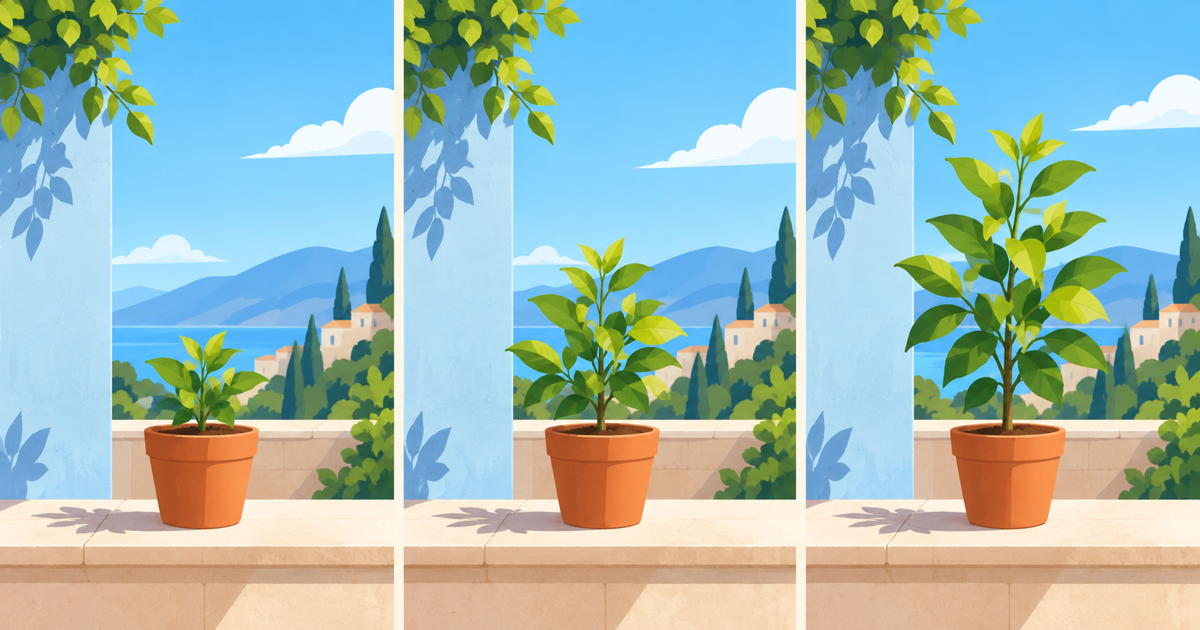
You need three forms for almost every comparison in English. Small describes one thing. Smaller compares two things. The smallest picks one winner from a group. If you mix them, people still understand you, but you sound off at once.
The good news is that one rule picks the form for you in most cases. Count the syllables in the adjective. Then check the spelling, learn four irregulars, and add the right comparison word. Once you can do that, you can compare anything you see, from flats to films to running times.
This page gives you that system with sentences you would actually say. You will see both versions where a contrast matters, and you will get the small words like than, the and as that hold the whole structure together.
Count syllables, then choose the form
Start with the adjective and count its beats. One-syllable adjectives take -er and -est. You say tall, taller, tallest and fast, faster, fastest. This is the default for short words, and it sounds natural to every native speaker.
Adjectives with three or more syllables take more and most. You say more expensive and most expensive, not expensiver. You say more interesting and most interesting. Long words never take -er or -est in standard English.
Two-syllable adjectives split into two groups. Words ending in -y usually take -er and -est, with a spelling change. You say happy, happier, happiest and easy, easier, easiest. Most other two-syllable adjectives take more and most. You say more modern and more careful, not moderner.
| One syllable | Two syllables | Three or more |
|---|---|---|
| tall, taller, tallest | happy, happier, happiest | expensive, more expensive, most expensive |
| cheap, cheaper, cheapest | quiet, quieter, quietest | important, more important, most important |
| hard, harder, hardest | careful, more careful, most careful |
Some two-syllable words accept both forms. Quiet, clever, simple and narrow are common in this group. You will hear quieter and more quiet, cleverest and most clever. Exams accept the -er form for these words, and British speakers use it a little more often. When you are unsure with a two-syllable word that does not end in -y, choose more and most. It is rarely wrong.
Same adjective, three jobs. Watch how the ending or the word before it changes the meaning.
My flat is small.
Plain form with no comparison. It just describes the flat, with no other flat in the picture.
My flat is smaller than yours.
Comparative form with than. It compares two flats, and than names the second one.
My flat is the smallest in the building.
Superlative form with the. It picks one winner from a group, and the group phrase names where it wins.
plain formcomparativecomparison wordsuperlativegroup
Fix the spelling before you add -er
You cannot just add -er to every short word. Three spelling rules cover almost all cases, and they also apply to -est. Learn them once and you will spell bigger and happier without thinking.
Double the final consonant after a short vowel. You write big, bigger, biggest and hot, hotter, hottest. You write thin, thinner, thinnest and sad, sadder, saddest. This doubling keeps the vowel short. Without it, biger would look like it rhymes with tiger.
Change final -y to -i after a consonant. You write happy, happier, happiest and easy, easier, easiest. You write funny, funnier, funniest. If a vowel comes before the -y, you keep the -y. You write grey, greyer, greyest.
Drop a silent -e before adding the ending. You write nice, nicer, nicest and large, larger, largest. You write close, closer, closest. You do not need this rule with more and most, because nothing joins the word. You write more large only when you mean something special, and in normal use you write larger.
Learn four irregular pairs by heart
Most adjectives follow the syllable rule. Four common ones do not, and they carry a large share of everyday comparisons [1]. You use them for quality, size, distance and amount, so you meet them in almost every conversation. Learn them as fixed sets.
Good, better, best covers quality. You say a good film, a better film, the best film. You never say gooder or more good. Bad, worse, worst covers the negative side. You say bad weather, worse weather, the worst weather. You never say badder.
Far, further, furthest covers distance and time. You say London is far, Leeds is further, Inverness is furthest when you start in the south. British English also uses farther, farthest for physical distance, while American English uses both forms more freely. Exams accept further for distance and for extra time or ideas.
- good, better, best. This coffee is good, that one is better, this one is the best. Use it for quality you like.
- bad, worse, worst. Yesterday was bad, today is worse. Use it when things go down, not up.
- far, further, furthest. It is further to the station than to the shop. Use it for distance, time and ideas.
- little, less, least. I have little time, less time than you, the least time of all. Use it for small amounts you cannot count.
Little, less, least needs care. Use it for uncountable nouns like time, money and rain. For countable nouns like apples or people, use few, fewer, fewest. You say fewer cars, not less cars, in careful writing, though you will hear less in shops and on signs.
Use than, the and as to finish the thought
A comparative needs than when you name the second thing. You say She is taller than me and This train is faster than the bus. You can end the sentence without than when the context is clear. You say She is taller and everyone knows you mean taller than someone you just named.
A superlative needs the in most cases. You say the tallest building and the most expensive ticket. You say She is the fastest in her class. Leave out the and the sentence feels unfinished. You do not use than with a superlative. You never say the tallest than all.
Use as ... as when two things are equal. You say You are as tall as me and This film is as good as the last one. Use not as ... as for the negative. You say It is not as warm as yesterday. American speakers often say as tall as me, while careful British grammar books prefer as tall as I, but me is normal in speech in both countries.
You can drop the second as plus the noun when it is obvious. You say It is not as easy when you both know what you mean. Keep the full form when you compare two named things. You say My commute is not as long as yours.
✦ Test yourself
Check the form and the small words
Two quick sets, with the reason each time
This bag is ___ than that one.
That was the ___ film of the year.
Today is ___ than yesterday.
She is ___ tallest in the team.
He is not ___ tall as his brother.
Slova turns the ones you missed into a ten-minute lesson, in sentences about your own week.
Practise this in Slova →Use more with adverbs and adjust strength
Adverbs follow a simpler rule than adjectives. Most adverb comparatives use more and most, even for short words. You say She speaks more slowly and He works more carefully. You say They arrived more early than we did in careful speech, though earlier is also common for time.
A small set of common adverbs has -er forms. You say faster, harder, sooner and later. You say Drive faster and Call me sooner. You say She runs fastest of the three. These are the same forms as the adjectives, and you already know them. When you are unsure with an adverb ending in -ly, choose more. You say more quietly, not quietlier.
You can soften or sharpen a comparison with one extra word. Use much or far to make the gap large. You say It is much cheaper and This room is far bigger. Use a bit or slightly to make the gap small. You say It is a bit colder today and This version is slightly better. Put the extra word before the comparative. You say much faster, not faster much.
You can also use even to stress surprise. You say It got even colder at night. You can use a lot in speech much as you use much. You say It is a lot busier on Saturdays. Keep very away from comparatives. You say very busy, but you say much busier.
Show gradual change with doubling
English shows slow change by repeating the comparative with and. You say It is getting hotter and hotter. You say The streets are getting busier and busier. The repeat tells the listener that the change keeps going. One hotter alone describes a single step, while hotter and hotter describes a trend.
Use more and more plus the adjective for long words. You say more and more expensive and more and more difficult. You say Travel is getting more and more popular. Do not mix the two patterns. You say hotter and hotter, not more hotter and hotter. You say more and more tired, not tiredder and tiredder.
You can use less and less for a downward trend. You say It became less and less clear. You can use fewer and fewer for countable nouns. You say There are fewer and fewer seats. Put the plus two comparatives together to show cause and effect. You say The earlier you leave, the easier the trip. You say The more you practise, the faster you get.
This doubling pattern suits speech and stories. You say She got better and better at chess. You say The nights got longer and longer. In formal writing, you can replace it with increasingly or progressively. You say increasingly difficult where speech would use more and more difficult.
Fix five errors that mark you out
These five mistakes appear in almost every classroom, and each one signals the same gap. Fix them and your comparisons will sound clean at once. Read each pair aloud and feel which version sits right.
- Do not stack more with -er. Say better, not more better. Say easier, not more easier. Say the easiest, not the most easiest. One marker is enough.
- Do not give long words -er. Say more beautiful, not beautifuller. Say more big is wrong, say bigger. If the word has three beats, use more and most.
- Do not drop the before a superlative. Say the cheapest hotel, not cheapest hotel. Say She is the best, not She is best, when you pick a winner.
- Do not use than with a superlative. Say the tallest of all, not the tallest than all. Say the cheapest in town, not the cheapest than in town. Than belongs with the comparative.
- Do not swap than for from or that. Say taller than, not taller from or taller that. Say different from, but bigger than. Some learners carry que or als into English, and than is the fix.
Tell Slova you mix up -er and more and it will build a short set on your own examples, then correct your than and the as you speak.
Build a mini path →Conclusion
Count the beats, fix the spelling, and learn the four irregulars. Then close the thought with than, the or as ... as. Practise on things around you right now and say both forms aloud until the right one comes first [2].
Frequently asked questions
Is it quiter or quieter?
Quieter. For most verbs and adjectives ending in quiet plus -er, you keep the u and add -er. Quiter is a spelling error.
Can I say more better?
No. Better already carries the comparison. Say better alone, or much better if you want extra strength.
Do I need the before a superlative?
In most cases, yes. Say the best and the tallest. You can drop it after a possessive, as in my best friend.
Is it further or farther?
Both are correct for distance in standard English. Further also covers time and ideas, as in further discussion.
Sources
- Council of Europe. Common European Framework of Reference for Languages: level descriptions. where this contrast sits in the A2-B1 range
- Dunlosky, J., Rawson, K. A., Marsh, E. J., Nathan, M. J., & Willingham, D. T. (2013). Improving students' learning with effective learning techniques. Psychological Science in the Public Interest, 14(1), 4-58. practice testing and spaced review rated high utility