Learn a language on your own, properly.
Grammar explained with sentences you would actually say, study plans that survive a bad week, and honest numbers about how long it takes.
Start here

English Tenses: All 12 and How to Pick One
Twelve tenses are three times crossed with four views of the action. Learn the pattern once and you stop guessing.

How to Learn Spanish by Yourself: A Realistic Plan
You can hold simple Spanish conversations in a few months with one clear goal, daily speaking practice, and steady review of what you learn.

Phrasal Verbs Work Like This, Start With These
A verb plus a small word makes a new meaning, and you learn the word order once, then reuse it everywhere.
Grammar

A, An or The? The Rule That Decides Every English Article
One question settles almost every English article: decide whether your listener already knows the exact thing you are pointing at.
Adjective vs Adverb: Good, Well and the -ly Trap
Good describes a person or thing. Well describes how you do something. That split explains almost every error.

Comparatives and Superlatives: Choose the Form
Short words take -er and -est, long words take more and most, and a small set of irregulars does the rest.
Conditional Sentences: Zero to Mixed in Real Examples
Each if sentence tells you how real the speaker thinks the condition is, and the verb forms show it.
Countable and Uncountable Nouns: One Test Decides
If you can count it with numbers, it takes a and a plural. If you cannot, it needs different words.
Do or Make? The Split That Fixes It
Do covers tasks you carry out, make covers things you create. Learn that split and the fixed pairs around it.
English Tenses: All 12 and How to Pick One
Twelve tenses are three times crossed with four views of the action. Learn the pattern once and you stop guessing.
Gerund or Infinitive? How English Picks -ing or to
The first verb chooses the form that follows it. Learn the verbs that demand -ing, the ones that take to, and the four that change their meaning.
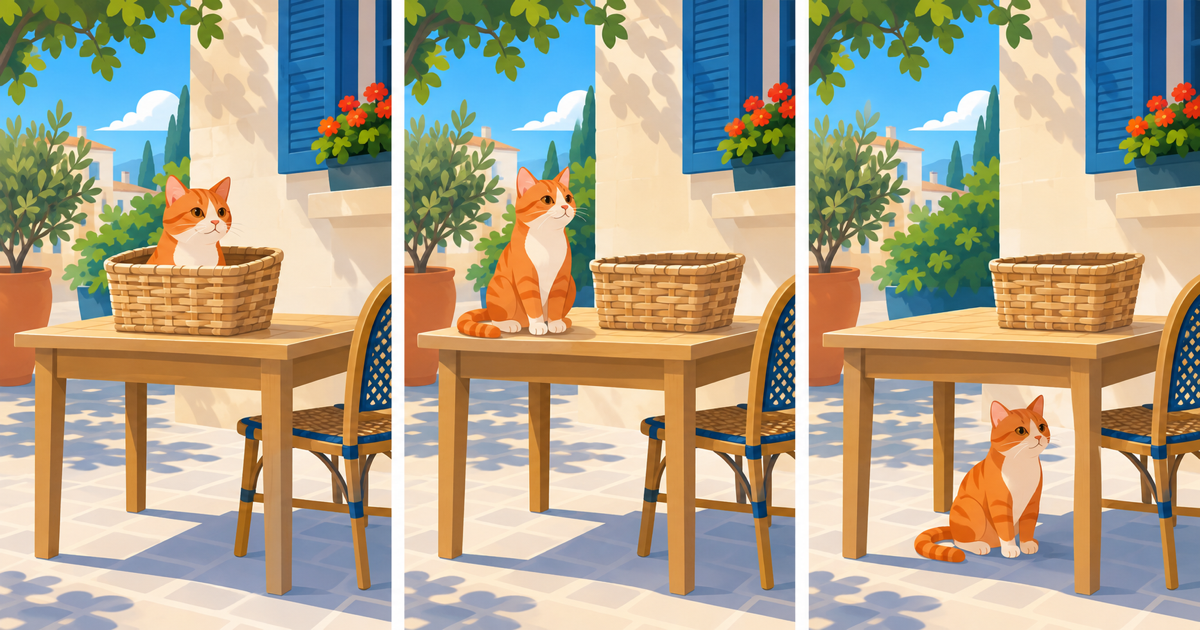
In, On or At? One Picture Picks the Word
In holds you, on holds you up, at finds you. That one picture picks the right word for time and place.
Irregular Verbs in Groups: Learn the 40 That Matter
You do not need two hundred verbs. You need forty verbs in four sound groups, used in sentences you would actually say.

Modal Verbs: What Can, Must and Should Really Do
Modals do not describe what happens. They show your view of it: you are able to do it, you are allowed to do it, or you are sure it is true.
Much vs Many vs A Lot Of: Quantity Rules
If you can count it, say many. If you cannot, say much. In positive statements, a lot of sounds natural for both.

Passive Voice: Build It and Use It Right
The passive moves the receiver to the front. You build it with be plus the past participle and you use it when the doer is unknown or does not matter.
Past Simple or Present Perfect? One Question Decides
Is the time finished, or does it still touch now? That single question settles almost every sentence.
Phrasal Verbs Work Like This, Start With These
A verb plus a small word makes a new meaning, and you learn the word order once, then reuse it everywhere.
Present Perfect: Build It and Use It Right
You link the past to now with have plus the past participle, and four clear uses tell you when to choose it.

Reported Speech: Say What Others Said Right
When you report the past, move the verb one step back and shift pronouns and time words with it.
Say or Tell? The Patterns That Fix It
Tell takes a person right after it. Say takes words, and needs to for a person. That split fixes almost every mistake.
Since or For? One Split Decides Which You Use
For counts the length of time. Since names the point where it started. Hold that split and you pick right every time.
Some vs Any: The Rule and When It Flips
Some belongs in positives, any belongs in negatives and questions, until an offer or a free choice flips the pattern.
There Is or There Are? Say What Exists
You say there is with one thing and there are with more than one, because the verb agrees with the noun that follows.

This, That, These, Those? Near or Far Decides
Near or far, one or many. Those two answers pick the right word in space, time and conversation.
Used To, Would or Be Used To: Pick the Right Form
Used to tells what stopped, would repeats a past action, and be used to tells what feels normal now.
Who, Which or That? Relative Clauses Made Clear
A relative clause sticks extra information onto a noun, and your commas tell the listener whether you identify or add detail.
Will or Going to? How English Picks a Future Form
A plan made before you speak takes going to, while a decision made right now takes will. Learn how English chooses between them and test your ear on real sentences.
App reviews

10 Best AI Apps to Learn Chinese (Mandarin) in 2026
Mandarin asks for four skills at once: tones, speaking, characters and reading. No app is best at all four, so here is which one wins each part, and which cover most of it.

10 Best AI Apps to Learn French in 2026
French rewards two things apps rarely teach together: saying it out loud and hearing it at real speed. These ten apps each solve part of that, and a few solve most of it.

10 Best AI Apps to Learn German in 2026
German punishes guessing. Genders, cases and verbs that jump to the end need clear teaching, and speaking needs daily practice. These ten apps split that work in different ways.

10 Best AI Apps to Learn Italian in 2026
Italian is one of the fastest languages for English speakers to start speaking. The right app keeps that early speed going past the café phrases and into real conversation.

10 Best AI Apps to Learn Portuguese in 2026
Most Portuguese apps teach Brazilian Portuguese, and only a few teach the Portuguese of Lisbon. This list tells you which is which, and which app fits your goal.

10 Best AI Apps to Practice English Speaking (2026)
Reading English is one skill, answering out loud without freezing is another. These AI apps train the second one, each in its own way, from gentle avatars to strict accent coaches.

10 Best AI Conversation Apps for Language Learning (2026)
An AI partner will talk with you any time, in almost any language. The real differences are how well it corrects you, whether it remembers you and what happens to your new words.
10 Best AI Language Learning Apps in 2026 (Tested)
There is no single best AI language app. There is a best one for speaking drills, for pronunciation, for learning around your own goal and for a tight budget. Here they are.

10 Best Babbel Alternatives in 2026 (We Tried Them)
Babbel teaches clear, tidy lessons. If you want more talking, a language it does not offer, a lower bill or a course shaped around your life, one of these fits better.

10 Best Duolingo Alternatives for Speaking in 2026
A 300-day streak and nothing to say out loud is a common story. These ten apps put your voice at the centre of the lesson, not at the end of it.

8 Best AI Apps for IELTS Speaking Practice (2026)
A mock test tells you where you are. Daily speaking practice moves you up. The best IELTS Speaking apps do one of these very well, and a few try to do both.

8 Best Apps to Learn a Language Fast in 2026
No app makes you fluent in a month. The right one can get you ordering, chatting and understanding far sooner than you think, if you pick for speed on purpose.

8 Best ELSA Speak Alternatives in 2026 (Tested)
ELSA is superb at sounds and weaker at conversation. These eight English apps help you speak clearly and keep talking, for work, study or just daily life.

8 Best Immersive Language Learning Apps in 2026
Immersion in an app can mean pictures with no translation, hours of easy video, a VR café or a real person on the other side. Each one works for a different learner.

8 Best Talkpal Alternatives in 2026 (Tested)
Talkpal lets you chat with an AI in almost any language. When the voices sound flat and the chats lead nowhere, these eight apps do more with your minutes.

8 Best Vocabulary Apps for Language Learning in 2026
Some vocabulary apps are a blank deck you build yourself, some pick the words for you and some teach them in sentences. The best one is the one whose words you will actually use.

9 Best AI Apps for Business English in 2026
Business English is not a word list. It is saying the right thing on a call, in a meeting or an interview, clearly enough that people hear your idea, not your mistakes.

9 Best AI Apps to Learn Arabic in 2026
Before you pick an Arabic app, pick your Arabic. Standard Arabic, Egyptian and Levantine are taught by different apps, and choosing the wrong one costs months.

9 Best AI Apps to Learn Japanese in 2026 (Tested)
Japanese asks for three things at once: speaking, three writing systems and a lot of words. No app does all three best, so here is the best one for each part.

9 Best AI Apps to Learn Korean in 2026 (Tested)
Hangul takes a weekend. Speaking Korean with the right level of politeness takes much longer. These nine apps each help with a different part of that climb.

9 Best AI Apps to Learn Spanish in 2026 (Tested)
Spanish has more good apps than any other language. Here is the best one for speaking, for listening, for grammar and for learning around your own life.

9 Best AI Language Apps for Beginners in 2026
Starting from zero is a different problem from getting better. A beginner needs clear first steps, gentle speaking practice and a reason to open the app again tomorrow.

9 Best AI Roleplay Apps for Language Learning (2026)
A good AI roleplay feels like a rehearsal for a real conversation. These nine apps do it best, from scripted café scenes to scenes you write yourself.

9 Best Apps to Learn a Language With TV Shows (2026)
Some tools sit on top of Netflix, some are their own streaming library and some build a course around the show you love. The right one depends on how you watch.

9 Best Language Learning Apps for Travel in 2026
A trip changes what you need from a language app: phrases you can say out loud in a noisy street, lessons that work without Wi-Fi, and enough listening to follow the answer.

9 Best Praktika Alternatives in 2026 (Tested)
Praktika is a friendly way to start talking. When the fixed path, the avatars or the missing word review start to bother you, these nine apps are the next step.

9 Best Speak App Alternatives in 2026 (Tested)
Speak gets beginners talking, but it is pricey, teaches seven languages and starts to repeat itself. These nine apps pick up where it stops.
Airlearn vs Duolingo (2026): Which App Teaches Better?
Airlearn is the clearer and cheaper teacher, Duolingo is the bigger and deeper course. Here is how they compare on lessons, speaking, habit and price.

Duolingo vs Praktika (2026): Which Gets You Speaking?
Duolingo is the better habit, Praktika is the better conversation partner. Here is how they compare on speaking, lessons, review and price.
Duolingo vs Speak (2026): Which Gets You Speaking?
Duolingo is the better habit and the better value, Speak is the better way to start talking. Here is how they compare on speaking, lessons, feedback and price.

Learna vs Praktika (2026): Which AI Tutor Is Better?
Learna is the better teacher of grammar, Praktika is the better conversation partner and the better deal. Here is how they compare on speaking, lessons, review and price.

Loora vs Speak (2026): Which AI English Tutor Is Better?
Loora is the better partner for open English conversation, Speak is the better course. Here is how they compare on speaking, lessons, feedback and price.
Pingo AI vs Praktika (2026): Which AI Tutor Wins?
Pingo gets you talking fastest and keeps a record of every call. Praktika corrects you better, feels more like a real tutor and costs less. Here is how they compare.

Praktika vs ELSA Speak (2026): Which Helps You Speak?
Praktika is the better conversation partner, ELSA is the better pronunciation coach. Here is how they compare on speaking, accent, lessons and price.

Speak vs ELSA Speak (2026): Which Should You Pick?
ELSA is the better pronunciation coach, Speak is the better speaking course. Here is how they compare on sounds, conversation, lessons and price.
Speak vs Praktika (2026): Which AI Tutor Gets You Talking?
Speak is the better course, Praktika is the better conversation partner and the cheaper plan. Here is how they compare on speaking, lessons, review and price.

Talkpal vs Praktika (2026): Which AI Tutor Is Better?
Talkpal is the better toolbox for many languages, Praktika is the more comfortable tutor. Here is how they compare on speaking, lessons, review and price.
Languages

How to Learn Arabic by Yourself: A Realistic Plan
Arabic rewards a clear dialect choice, daily script reading, and short speaking reps inside a goal you care about.

How to Learn Chinese by Yourself: A Realistic Plan
You can hold real Mandarin conversations in months, not years, by fixing tones first, learning characters by frequency, and speaking daily with correction.

How to Learn Dutch by Yourself: A Realistic Plan
You can learn Dutch by yourself with one clear goal, daily speaking practice, and a plan for the inburgering and NT2 exams that actually fits your route.

How to Learn English by Yourself: A Realistic Plan
You can reach B2 without a class if you study inside a goal you care about, speak with correction, and review on schedule.

How to Learn French by Yourself: A Realistic Plan
You can learn French alone if you pick one clear goal, train sounds early, and practise a little every day with phrases you will actually say.

How to Learn German by Yourself: A Realistic Plan
German is regular and learnable alone if you fix one testable goal, speak from week one, and review everything in one place.

How to Learn Greek by Yourself: A Realistic Plan
You can hold simple Greek conversations within months by picking one goal, learning the alphabet in a week, and speaking daily with correction and review.

How to Learn Hebrew by Yourself: A Realistic Plan
You can hold simple Hebrew conversations within months by picking one goal, reading the alphabet in a week, and speaking daily with correction and review.

How to Learn Hindi by Yourself: A Realistic Plan
You can hold real Hindi conversations in months by learning Devanagari in stages, fixing gender agreement early, and speaking daily with correction.

How to Learn Italian by Yourself: A Realistic Plan
You can reach solid everyday Italian alone with one clear goal, short daily blocks, and phrases you actually say.

How to Learn Japanese by Yourself: A Realistic Plan
You can reach basic Japanese alone in 12 weeks if you fix sounds first, learn script and kanji by frequency, and speak from day one.

How to Learn Korean by Yourself: A Realistic Plan
You can learn Korean alone if you start with Hangul, one testable goal, and daily speaking and review.

How to Learn Norwegian by Yourself: A Realistic Plan
You can pass a real Norwegian requirement in a few months with one testable goal, daily speaking practice, and a plan built around dialects, not around them.

How to Learn Polish by Yourself: A Realistic Plan
You can learn Polish by yourself with one clear goal, daily speaking practice, and the seven cases learned two at a time through phrases, not tables.

How to Learn Portuguese by Yourself: A Realistic Plan
You can reach everyday Portuguese alone by choosing one variety, one testable goal, and a steady routine of short speaking, listening and review sessions.

How to Learn Russian by Yourself: A Realistic Plan
Russian is learnable alone if you start with Cyrillic, one testable goal, and short daily work on speaking, cases, and words.
How to Learn Spanish by Yourself: A Realistic Plan
You can hold simple Spanish conversations in a few months with one clear goal, daily speaking practice, and steady review of what you learn.

How to Learn Swedish by Yourself: A Realistic Plan
You can hold real Swedish conversations in a few months with one testable goal, daily speaking practice, and the right certificate for what you actually need.

How to Learn Thai by Yourself: A Realistic Plan
You can speak real Thai in a few months with one clear goal, daily speaking practice, and a script you start reading within the first month, not the last.

How to Learn Turkish by Yourself: A Realistic Plan
Turkish spelling is phonetic and grammar is regular, so steady daily work on phrases, sounds and speaking takes you to real conversation.

How to Learn Vietnamese by Yourself: A Realistic Plan
You can hold real Vietnamese conversations in a few months with one clear goal, daily speaking practice, and the six tones drilled two at a time.