
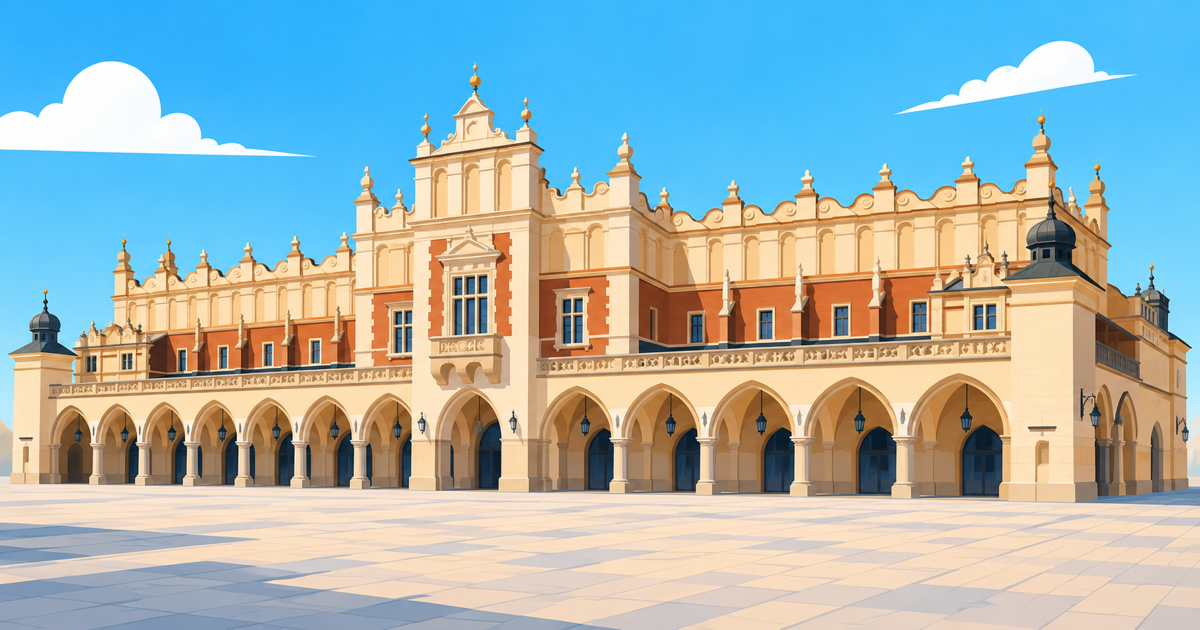
Yes, you can learn Polish by yourself, cases and all. Pick one real goal, learn two cases at a time through phrases you will actually say, speak out loud every day, and trust that the spelling is far more regular than the seven cases make it look.
Polish asks more of you than French or Spanish, and it is honest to say so upfront. The US Foreign Service Institute puts it in Category III, at 44 weeks or about 1,012 class hours to reach professional working proficiency [1]. You do not need anywhere near that for a first real conversation. Around 250 to 300 focused hours gets you through daily life, simple work talk, and a first official exam level.
Part 1 · Start right
How long Polish really takes
Think in stages, not a single number. At 45 minutes a day, you can read Polish spelling correctly within two weeks and handle greetings, numbers and simple shopping within 6 to 8 weeks. Survival-level Polish, close to A1, is realistic in about 3 to 4 months of steady work.
A2 takes longer, because you start using more cases and the past tense starts agreeing with your own gender. Most self-learners need 6 to 9 months at 5 to 6 days a week to reach it. B1, where you manage work email, a phone call, and an official form, often takes 12 to 18 months alone [1].
Use the Common European Framework of Reference for Languages, CEFR, to track where you stand: six levels from A1 to C2 with can-do statements for listening, reading, speaking and writing [2]. Polish has its own state exam built directly on this scale.
| CEFR level | What you can do | Polish state exam |
|---|---|---|
| A1 | Greet people, spell your name, read short signs | Egzamin certyfikatowy, level A1 |
| A2 | Describe your family and daily routine, shop, make a simple appointment | Egzamin certyfikatowy, level A2 |
| B1 | Handle a work task, explain a problem, read a letter from an office | Egzamin certyfikatowy, level B1 |
| B2 | Study or work in Polish, follow the news, write clear emails | Egzamin certyfikatowy, level B2 |
| C1-C2 | Work fully in Polish, catch tone and register | Egzamin certyfikatowy, level C1/C2 |
The certificate is issued after an exam set by the State Commission for Certifying Knowledge of Polish as a Foreign Language, a body created by Polish law and run under the Ministry of Science and Higher Education through the National Agency for Academic Exchange, NAWA [3]. One commission runs every level, so the name on your certificate stays the same whichever one you sit.
Pick your target by what you need it for. Residence permits and most jobs ask for B1. University study or a professional role asks for B2. If your goal has no official level, aim for B1 anyway, since that is the point where daily life stops being a translation exercise.
Pick one goal that actually matters
Self-study fails quietly. You study whatever page comes next, none of it ties to a result you actually want, and after a few weeks you stop. Material tied to a goal you chose gets learned faster and remembered longer [4]. Before you open a textbook, write the one thing Polish needs to do for you in the next 12 weeks.
Good goals name a date and a proof: a job, a move, your partner's family, an exam, or a show or book you want to follow in Polish. A vague goal like "get better at Polish" gives your brain nothing to reach for.
Learn Polish because my partner's family speaks it.
By 1 December, hold a 10-minute phone call with my partner's mama about weekend plans, without switching to English.
Write that goal into Slova and it builds the path around it: a move to Kraków, the state certificate at B1, a call with teściowa. The lessons, words and conversations all come from your one sentence.
See how paths work →Other goals work the same way: pass the state exam at B1 before your residence renewal, handle a work meeting in Warsaw without asking colleagues to switch to English, or read a letter from an urząd and know exactly what it wants from you.
Make the first two weeks easy
Give your first two weeks to sounds and spelling, not grammar. Polish spelling looks intimidating and is actually one of its kindest features: once you learn a short list of digraphs, almost every word reads exactly as it is written.
Learn the two families of hushing sounds side by side. Sz and cz are the hard pair: sz sounds like the "sh" in shop, as in szkoła (school); cz sounds like the "ch" in church, as in czas (time). Ś and ć are their soft twins, said further forward in the mouth: ś in środa (Wednesday), ć in ćwiczenie (exercise). Say sz against ś, then cz against ć, until the softness is audible.
Learn stress in one sitting: almost every Polish word is stressed on the second-to-last syllable, as in Warszawa and dziękuję. A handful of Latin-derived words like matematyka break the rule, but the exceptions are rare enough to ignore for now.
- Say 50 survival phrases out loud: greetings, numbers 1 to 100, days, and polite forms like Czy mogę…? and Proszę mówić wolniej.
- Read signs and menus aloud for 10 minutes: wejście, wyjście, otwarte, zamknięte, rachunek.
- Shadow slow audio for 10 minutes: listen, pause, copy the rhythm, repeat without reading.
- Write three lines nightly about your day using dzisiaj, wczoraj and jutro with the present tense.
Follow a simple weekly routine
Study five or six days for 45 minutes. Short daily contact beats one long weekend session, because your memory needs to meet each case ending more than once. Use the same shape every day: warm up with sounds, learn one small chunk, use it out loud, then read or listen, then save new words for review.
- Monday to Friday: 10 minutes pronunciation, 20 minutes a lesson or dialogue, 10 minutes a speaking task, 10 minutes reading or listening.
- Saturday: 30 minutes review plus one role-play, such as a work meeting, a clinic visit or a call to an urząd.
- Sunday: rest, or 20 minutes of a series with Polish subtitles, pausing to repeat useful lines.
Track hours, not feelings. Note the date, minutes, what you said out loud, and new endings saved. When motivation dips, the sheet is proof you are moving toward your goal.
Part 2 · Grammar and skills
Learn the seven cases two at a time
A case is the form a noun takes to show its job in the sentence. Polish has seven, and a full table on day one teaches the wrong lesson. Learn one pair every one to two weeks, as a question plus phrases you will actually say, and let the tables wait until the endings are already in your mouth.
Start with the nominative and accusative together, since they are the pair you need to name things and act on them. Nominative answers Kto? Co?: To jest Anna. (This is Anna.), To jest książka. (This is a book.) Accusative answers Kogo? Co? after verbs like see and read: Widzę Annę. (I see Anna.), Czytam książkę. (I am reading a book.), Kocham Warszawę. (I love Warsaw.) Notice Anna becomes Annę, and książka becomes książkę: feminine nouns ending in -a swap it for -ę.
Add the genitive and dative next. Genitive answers Kogo? Czego?, and covers "no" and "of": Nie ma wody. (There is no water.), Szukam pracy. (I am looking for a job.), dom mojej mamy (my mom's house). Dative answers Komu? Czemu?, for the receiver of something: Daj mi, proszę. (Give me, please.), Podoba mi się Warszawa. (I like Warsaw.), Powiedz Annie prawdę. (Tell Anna the truth.)
Move to instrumental and locative once the first four feel automatic. Instrumental answers Kim? Czym?, for means or company: Piszę długopisem. (I write with a pen.), Rozmawiam z mamą. (I am talking with mom.), Jadę z kolegą. (I am going with a friend.) Locative answers O kim? O czym? Gdzie?, and only ever follows a preposition like w, na or o: Mieszkam w Warszawie. (I live in Warsaw.), Mówimy o pracy. (We are talking about work.), W domu jest cicho. (It's quiet at home.)
Meet the vocative last, and treat it lightly: it is for addressing someone directly, and mostly shows up with names and family words. Say Mamo, chodź tutaj. (Mom, come here.) and Anno, poczekaj. (Anna, wait.) a few times and move on; you will absorb it from greetings long before you study it on purpose.
Tell perfective from imperfective through phrases
Every Polish verb of action comes in two forms: imperfective, for something ongoing, repeated or unfinished, and perfective, for one completed action with a result. English hides this split inside tense; Polish makes you choose it every time you speak.
Say the same story both ways until the contrast is automatic. Pisałem list. (I was writing a letter, ongoing) against Napisałem list. (I wrote the letter, done). Czytałam książkę. (I was reading a book) against Przeczytałam książkę. (I finished reading the book). Past-tense verbs also agree with the speaker's gender: use -łem if you are male and -łam if you are female.
The future carries the same split. Imperfective verbs build a future with będę plus the infinitive: Będę pisać raport. (I will be writing the report.) Perfective verbs need no helper, since a perfective verb has no present tense to confuse it with: Napiszę raport. (I will write the report, and it will be done.)
Learn each pair as one unit from the start: robić / zrobić (to do), czytać / przeczytać (to read), pisać / napisać (to write). Say both halves in a sentence about your own day before you move to the next pair.
Train all four skills without a teacher
Split your time across listening, reading, speaking and writing, with extra weight on speaking, since only speaking and writing force you to build sentences yourself.
Listen for gist first, then for detail: play a two-minute clip and write who, where and what they want, then play it again and catch numbers and verbs. Use short news bulletins and workplace dialogues tied to your goal before you move to films.
No clip at your level? Name a topic and Slova writes you a Polish podcast, lesson or story at your level, with the transcript running beside the audio. Tap any word to keep it.
Make one →Read at your level, with support: use graded texts where you already know eight words in ten, read once for the story and again to copy three useful sentences, then read them aloud.
Write little and often. After each lesson, write a 60-word note you might actually send: confirm an appointment, thank a colleague, explain you will be late. Check your case endings and verb aspect, then save the corrected version.
Speak every day and get corrected with a reason. A self-learner needs a corrector because you cannot hear your own gaps; understanding input is not the same as producing accurate output [5]. Record a one-minute answer, fix one thing, and say it again correctly three times.
Correction is the one thing you cannot do alone. Felix, the tutor inside Slova, hears Widzę Anna, tells you it is Widzę Annę, and explains why a direct object after widzieć takes the accusative.
Hear a lesson →Run role-plays tied to your goal twice a week: the job applicant, the patient at a clinic, the tenant at an urząd. Ask for repetition with Proszę powtórzyć wolniej., and end by retelling what was agreed.
Learn vocabulary that sticks
Learn frequent words first, then words for your goal. The first 1,000 word families cover most everyday talk: people, time, work, movement and polite verbs. Then add the 200 to 300 terms your goal actually needs, like umowa (contract), spotkanie (meeting) or mieszkanie (apartment).
Learn each word with an image and its case ending together, not as a bare translation. A word stored with a picture has two paths back to memory. Describe a kitchen and label lodówka, kuchenka and zlew, then use each one in a sentence you might actually say.
Ask Slova for a market in Kraków and it draws the scene, labelled: stragan, warzywa, chleb. Every word you meet lands in one list and comes back for review before you forget it.
See a scene →Keep everything you meet in one list and review it on a spaced schedule. Short, repeated testing beats long rereading for holding on to new words [6]. Import words you already know so review starts from your real level, and test old words just before you would forget them.
Work words in small sets. Take umowa, spotkanie, termin and złożyć and build one work story that uses all four.
Avoid five common mistakes
Fix these five early and your Polish will sound clearer within weeks.
- Using the nominative everywhere. Say Widzę Annę, not Widzę Anna. The object of a verb almost always changes its ending; ask the case's question before you speak.
- Mixing up sz/cz and ś/ć. Proszę uses the hard sz, like sh in shop; dziś (today) uses the soft ś, further forward in the mouth. Drill the four sounds in pairs until your tongue finds the difference.
- Ignoring verb aspect. Say Przeczytałam książkę for a finished book, not Czytałam książkę, if you mean you are done. The choice changes the meaning, not just the style.
- Forgetting gender agreement in the past tense. Say Zrobiłem to if you are male, Zrobiłam to if you are female. The verb, not just the pronoun, carries your gender.
- Translating word for word from English. Learn set phrases like Jak się masz? and Do widzenia whole, not built from parts.
Your 12-week plan
Follow this plan for 45 to 60 minutes a day. Each block builds on the last, so keep the speaking tasks even when they feel slow.
| Weeks | Focus | Speaking proof | Words to keep |
|---|---|---|---|
| 1-2 | Sounds, sz/cz/ś/ć, greetings, numbers, nominative | Introduce yourself for 2 minutes: name, work, city, family | 150 survival words |
| 3-4 | Accusative, daily routine, shops and appointments | Book and confirm a spotkanie, ask prices, spell your name | Food, shops, days, accusative phrases |
| 5-6 | Genitive and dative, past tense and aspect pairs | Tell a 3-minute story about your last job | umowa, spotkanie, termin |
| 7-8 | Instrumental and locative, work and office phrases | Explain a problem on the phone for 5 minutes | urząd terms, praca vocabulary |
| 9-10 | Goal block: state exam tasks, work Polish, or family talk | Role-play your exact goal for 10 minutes, no English | 200 goal words |
| 11-12 | Review, mock exam, fix top errors, extend path | Record two proofs: interview and daily-life task | Review full list, add 100 new words |
End week 12 by testing your original goal: timed reading and speaking tasks graded against past papers for the state exam, or a full mock version with feedback on clarity for a job or a family call. Keep the words you missed in your single list.
Conclusion
You do not need every case down cold before you speak Polish, you need a testable goal, daily speech, and cases learned two at a time in phrases you actually use. Polish rewards patience: the spelling is more regular than it looks, and the grammar is a small, learnable system once you stop hunting for one rule to explain it all. Give the first 12 weeks steady hours, fix one error at a time, and keep every word where you can review it. When you reach your goal, extend the plan and keep speaking.
Frequently asked questions
How long does it take to learn Polish by myself?
With 45 to 60 minutes daily, most beginners reach survival-level Polish in 3 to 4 months and A2 within 6 to 9 months. The FSI estimate of about 1,012 class hours is for full-time diplomatic training toward professional proficiency, far beyond a first real conversation.
Are the seven Polish cases really as hard as people say?
They are unfamiliar, not impossible. Learn each pair as a question plus 5 to 10 phrases you say often, not as a full table. Endings become automatic once you have used them in enough real sentences.
What is the official Polish exam, and which level should I aim for?
The state certificate exam in Polish as a foreign language, run under a State Commission, covers A1 to C2. Most residence and work situations ask for B1; university study or professional roles ask for B2.
How do I know if a verb should be perfective or imperfective?
Ask whether the action is ongoing or repeated, which is imperfective, or one completed action with a result, which is perfective. Learn each verb as a pair from the start and practise both halves in sentences about your own day.
Sources
- U.S. Department of State, National Foreign Affairs Training Center (2026). Foreign Language Training. — FSI Category III hours for Polish, 44 weeks / about 1,012 class hours
- Council of Europe (2026). The CEFR Levels. — six levels A1-C2 with can-do descriptors
- National Agency for Academic Exchange, NAWA (2026). State Commission for Certifying Knowledge of Polish as a Foreign Language. — the Commission's role, oversight, and certification at six CEFR levels, A1-C2
- Walkington, C. A. (2013). Using adaptive learning technologies to personalize instruction to student interests. Journal of Educational Psychology, 105(4), 932–945. — interest-personalised material learned faster
- Swain, M. (1985). Communicative competence: Some roles of comprehensible input and comprehensible output in its development. In S. Gass & C. Madden (Eds.), Input in second language acquisition (pp. 235–253). Newbury House. — production forces learners to test their own hypotheses about forms
- Dunlosky, J., Rawson, K. A., Marsh, E. J., Nathan, M. J., & Willingham, D. T. (2013). Improving students' learning with effective learning techniques. Psychological Science in the Public Interest, 14(1), 4–58. — testing and spaced practice outperform rereading